Housing Affordability Pressures Drive Crypto Mortgage Innovation
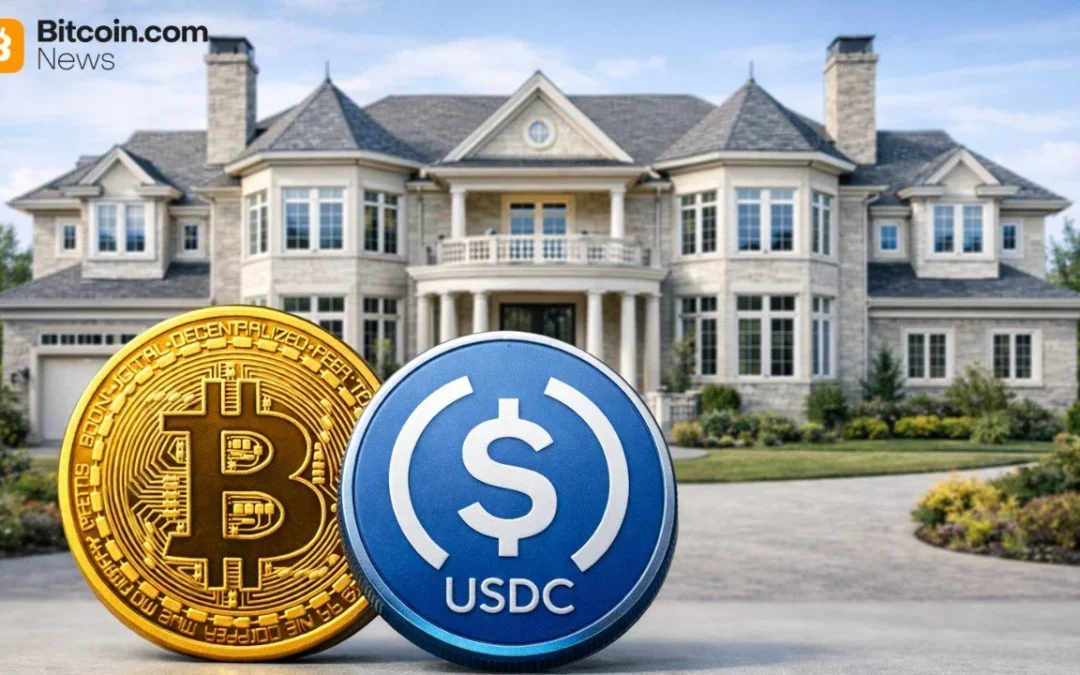
Growing barriers to homeownership are prompting financial firms to redefine how wealth is evaluated, with Coinbase partnering with Better Home & Finance Holding Company to enable crypto-backed mortgages supported by Fannie Mae that allow borrowers to use bitcoin or USDC instead of cash for down payments.
Access constraints stem from structural shifts in housing affordability and borrower qualification standards. According to the NAHB/Wells Fargo Cost of Housing Index (CHI) released in March 2026, a typical family earning the national median income of $104,200 needed 34% of their income to cover the total mortgage payment on a median-priced new home in Q4 2025. For lower-income households earning 50% of the median, these costs reached 67% of their earnings, a level the Department of Housing and Urban Development (HUD) classifies as a severe cost burden. Coinbase stated:
“This first-of-its-kind mortgage product, offered by Better and powered by Coinbase, expands access to homeownership.”
Crypto Assets Challenge Traditional Mortgage Barriers
Traditional lending models prioritize income history, credit profiles, and liquid savings, limiting eligibility to individuals with established capital. Coinbase explained: “Prospective homeowners will soon be able to use bitcoin or USDC in their Coinbase accounts to fund their cash down payments.”
For the mortgage product offered by Better and powered by Coinbase, collateral requirements introduce defined thresholds, where bitcoin-backed loans require at least 250% of the fiat down payment value, while USDC-backed loans require 125%, meaning a $250,000 BTC pledge or $125,000 in USDC can unlock a $100,000 down payment loan.
Forced liquidation introduces tradeoffs, including forfeiting potential price appreciation and triggering tax liabilities, which can discourage participation in the housing market. Crypto-backed structures alter that dynamic by converting digital holdings into usable collateral, allowing borrowers to secure financing without selling assets.
Coinbase concluded:
“This is a major step forward for crypto’s real-world utility, with this new offering providing the unique benefit of added stability and government backing.”
By linking crypto collateral to mortgages supported by Fannie Mae, the model expands eligibility beyond conventional profiles while integrating digital assets into regulated housing finance systems.
FAQ 🧭
- How do crypto-backed mortgages impact housing demand?
They may expand buyer pools by unlocking liquidity from digital assets without requiring liquidation. - What risks should investors consider in crypto mortgage models?
Volatility in collateral value and regulatory shifts could affect loan stability and adoption. - Why are firms like Coinbase entering mortgage markets?
They aim to extend crypto utility into real-world finance and capture new lending revenue streams. - Could crypto collateral change traditional credit evaluation?
Yes, it introduces alternative wealth metrics that may reduce reliance on income and credit history.