Key Takeaways
- CZ cited about $1.9 billion leaving U.S. bitcoin funds over seven sessions.
- Binance committed more than $6.34 billion to cover hack losses.
- CZ denied Binance sold crypto and disclosed buying during the decline.
CZ Examines IPO Demand and Fund Withdrawals
Binance founder and former CEO Changpeng Zhao, known as CZ, outlined potential reasons for the crypto selloff on X on Nov. 15, attempting to answer the question “Why are crypto prices down?” Noting that bitcoin’s low that day was $62,006, he stated:
“No one knows for sure. Correlation does not prove causation.”
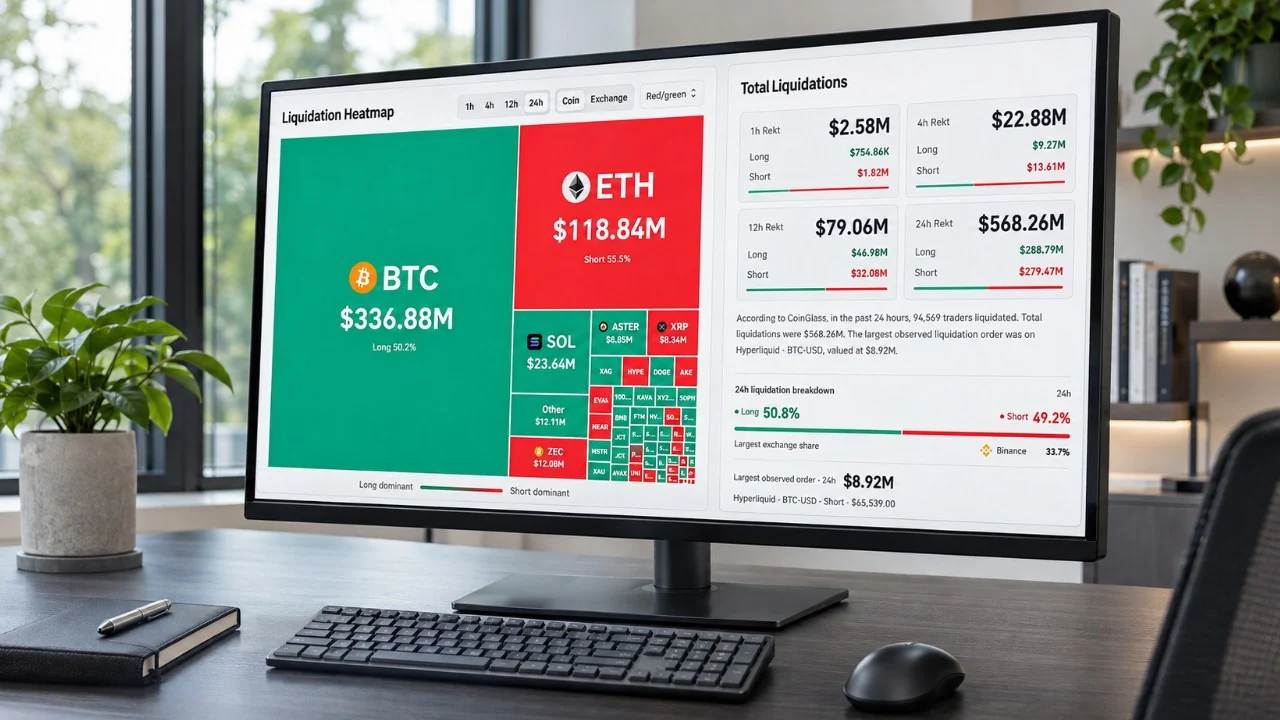
Bitcoin liquidations totaled $336.88 million over 24 hours as of 5:30 p.m. EST on Nov. 15, with long positions making up 50.2%, according to Coinglass. Across all tracked assets, liquidations reached $568.26 million over the same period, with 94,569 traders liquidated.
One possible pressure was money moving toward Anthropic, the company behind the Claude AI assistant. It launched its IPO roadshow on Nov. 10, beginning presentations to prospective investors. The proposed sale of 825 million shares at $70-$78 each could generate up to $64.35 billion before fees, combining shares offered by Anthropic and existing stockholders.
Binance Research examined AI financing concerns on Nov. 15, reporting bitcoin’s 15.6% decline over 11 days. Over the same period, perpetual contracts tracking AI cloud company Nebius (Nasdaq: NBIS) fell 27.5%. The team used those contracts as a proxy for sentiment toward businesses exposed to AI financing.
Fund withdrawals were another factor, with Zhao citing about $1.9 billion leaving U.S. spot bitcoin exchange-traded funds over seven sessions through Nov. 13, along with withdrawals from ether funds. Those consecutive sessions of bitcoin ETF outflows included approximately $1.07 billion during Nov. 9-13. Net outflows occur when redemptions, or withdrawals from a fund, exceed new investments.
Exchange Theft and Software Flaws Enter CZ’s Assessment
Security concerns included the Binance hack, drained iPhone-linked wallets, a Chrome exploit, and a Microsoft outage, which Zhao suggested could discourage crypto holdings. An exploit is code or a technique that takes advantage of a software vulnerability. For personal wallet protection, cold storage keeps private keys offline, reducing their exposure to online attacks.
The Binance theft was the subject of a Justice Department enforcement announcement on Nov. 12. U.S. authorities obtained court authorization to seize or restrain more than $1.2 billion stolen from the exchange. The department attributed the attack to North Korean hackers and reported that coordinated government and private-sector efforts had frozen more than $2.7 billion.
Separately, Binance said it had completed coverage of affected assets after committing more than $6.34 billion in company funds. The exchange also published a reserve snapshot covering 198 tokens, recording balances at midnight UTC on Nov. 12. That disclosure accompanied its update on replacing assets lost in the attack.
Inflation and US Policy Add to Crypto Uncertainty
U.S. inflation was Zhao’s fourth possible explanation, with hot readings raising expectations of another Federal Reserve rate increase. Higher bond yields, the returns offered by bonds, can make interest-paying investments more attractive. A stronger dollar can also raise the cost of dollar-priced assets for buyers using other currencies, potentially weighing on cryptocurrency.
Political uncertainty completed his list, with the midterm results raising concerns about potentially stricter U.S. crypto policy. Beyond those potential pressures, Zhao addressed the exchange’s own activity during the downturn. He stated:
“No, Binance did not sell crypto.”
Turning to his own purchases, Zhao offered: “I bought crypto in the past few days, as I got some stablecoins recently. (maybe this is the cause)” as a joke about causing the selloff. He added: “Mid-long term, crypto will continue to grow.” The comments reflected his own views, he emphasized.