Warren Targets Bitmain, Trump Crypto Ties, and Security Risks
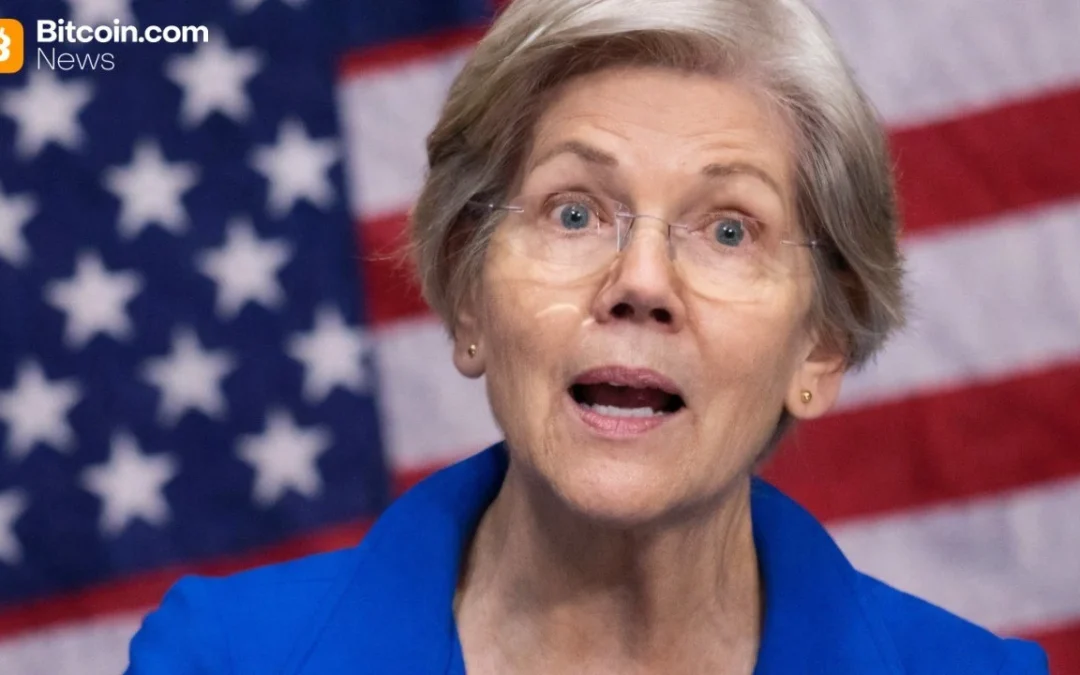
Heightened scrutiny over crypto-linked supply chains has reached the U.S. Commerce Department. The Senate Committee on Banking, Housing, and Urban Affairs announced March 30, 2026, that U.S. Senator Elizabeth Warren sent a March 26 letter to Commerce Secretary Howard Lutnick questioning oversight of Bitmain, a Chinese bitcoin mining hardware producer tied to a venture involving Eric Trump.
Concerns outlined in the correspondence focus on potential infrastructure vulnerabilities and foreign influence risks tied to mining equipment deployed in the United States. Warren wrote:
“Facing potential investigations, Bitmain’s strategy has reportedly been to enter into ‘an alliance with one of President Donald Trump’s children,’ specifically Eric Trump, who is the cofounder of the crypto mining company American Bitcoin.”
“In a recent interview, sitting next to his business partner Eric Trump, American Bitcoin CEO Michael Ho confirmed that Bitmain ‘has been a leading manufacturer for us,’” Warren noted. The letter also references federal reviews into whether such hardware could be remotely accessed or exploited within U.S. power systems.
Financing Deals, Export Controls, and Mining Security Debate
Additional details highlight prior federal action against Sophgo Technologies Ltd., a Bitmain affiliate, which was placed on a Commerce Department blacklist for supporting China’s advanced semiconductor ambitions. The document notes that Bitmain dominates a large share of global mining hardware production and has been linked in prior reports to Chinese state interests, raising broader supply chain and intelligence concerns. Lawmakers emphasized that the agency holds authority over export controls and communications technology risks, placing it at the center of enforcement decisions involving foreign-linked crypto infrastructure.
Counterarguments from industry participants and Trump-aligned officials characterize the situation as a strategic effort to increase domestic control over bitcoin mining capacity. Commerce leadership and advisers have promoted the view that concentrating hash rate within the United States strengthens national security objectives. American Bitcoin executives, including Ho, have pointed to Bitmain’s position as a primary equipment supplier, while supporters interpret favorable financing arrangements as standard commercial practice. Industry groups have also dismissed claims that mining hardware could interfere with grid systems, citing the separation between mining operations and critical infrastructure controls, along with demand-response mechanisms that allow facilities to reduce electricity usage during peak periods.
Further scrutiny centers on financial arrangements between Bitmain and American Bitcoin, including equipment deals structured around future bitcoin payments rather than cash. Warren alleged:
“Bitmain gave Eric Trump’s American Bitcoin ‘unusual’ terms, including exchanging hundreds of million dollars worth of equipment for future, ‘pledged,’ bitcoin rather than cash—a deal that some industry experts viewed as ‘distinctly generous to American Bitcoin.’”
The letter concludes by requesting records and responses by April 9, 2026, while stating: “National security decisions on U.S. export controls and trade laws must be insulated from improper political influence.”
FAQ 🧭
- Why is Bitmain under U.S. scrutiny?
Lawmakers cite national security risks tied to foreign-linked mining hardware and supply chains. - How could crypto mining hardware impact infrastructure security?
Officials are assessing whether equipment could be remotely accessed or affect power systems. - What concerns investors about Bitmain and American Bitcoin deals?
Unusual financing terms involving future bitcoin payments raise governance and risk questions. - What does this mean for U.S. bitcoin mining growth?
Policy debate centers on domestic hash rate expansion versus foreign dependency risks.