
Key Takeaways:
- Carmine Agnello, grandson of Gambino boss John Gotti, received a 15-month federal prison sentence on April 20, 2026.
- Agnello diverted roughly $420,000 of $1.1 million in fraudulent SBA EIDL funds into a cryptocurrency business.
- U.S. Attorney Joseph Nocella Jr. signaled the Eastern District of New York will continue prosecuting COVID-19 relief fraud cases.
Gambino Family Descendant Gets Prison Time for Diverting COVID Funds Into a Crypto Company
U.S. District Judge Nusrat J. Choudhury imposed the sentence in federal court in Central Islip, New York. Agnello, 39, of Smithtown, New York, must also pay $1,268,302 in restitution to the SBA, serve two years of supervised release following his release from prison, and complete 100 hours of community service. The sentence came below federal guidelines, which pointed to a range of roughly 31 to 44 months.
Agnello operated Crown Auto Parts and Recycling, LLC, based in Jamaica, Queens. Between April 2020 and November 2021, he submitted at least three fraudulent applications for Economic Injury Disaster Loans through the SBA’s CARES Act program, which provided low-interest emergency financing to small businesses hurt by the pandemic. He received the full $1.1 million.
To obtain the funds, Agnello misrepresented the number of employees at Crown, falsely described how the loan proceeds would be used, and claimed he had no criminal record. He had a 2018 New York State misdemeanor conviction at the time. The SBA and associated financial institutions wired the money to bank accounts he controlled. Instead of using the funds for payroll, rent, or operating expenses, Agnello diverted the proceeds for personal benefit, including investing approximately $420,000 into a cryptocurrency business.
Agnello pleaded guilty on Sept. 26, 2024, before Judge Choudhury to one count of wire fraud. The charge carried a maximum of 30 years in prison. At sentencing, his defense noted personal circumstances, including his role as a kidney donor to his mother, Victoria Gotti. After court, Agnello told NBC New York reporters, “It’s alright, it could be worse.” Prosecutors framed the conduct as a deliberate misuse of taxpayer funds during a national crisis.
U.S. Attorney Joseph Nocella Jr. said the defendant “shamefully lined his own pockets with government and taxpayers’ dollars” that were meant to support legitimate businesses and workers during the pandemic. Nocella added that his office would continue to pursue individuals who stole from the relief programs. U.S. Postal Inspection Service Inspector in Charge Ketty Larco-Ward said the case showed what postal inspectors and law enforcement partners can accomplish working together. The scheme was investigated by the U.S. Postal Inspection Service, with assistance from Homeland Security Investigations.
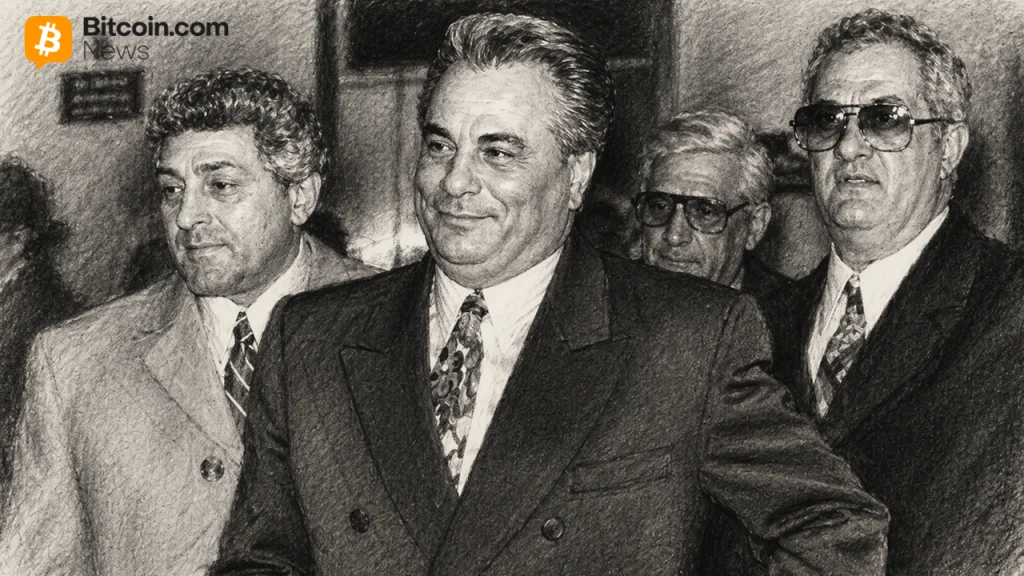
Agnello is publicly known as a reality TV personality from the mid-2000s A&E series “Growing Up Gotti,” which followed the family of his grandfather, John Gotti. His grandfather rose to the top of the Gambino crime family in 1986 after helping orchestrate the assassination of boss Paul Castellano outside a Manhattan steakhouse in December 1985.
Unlike most mob leaders, Gotti embraced public attention, appearing regularly in expensive suits and high-profile settings. That visibility earned him the nickname “Dapper Don” and later “Teflon Don” after he beat several federal prosecutions in the late 1980s. Federal prosecutors eventually used surveillance recordings and testimony from former underboss Salvatore “Sammy the Bull” Gravano to convict him on racketeering and murder charges in 1992.
The former mob boss died in prison in 2002. Agnello’s case centers on pandemic relief fraud and is unrelated to organized crime matters involving his late grandfather and other Gotti family members. The cryptocurrency business that Agnello invested in is not publicly named in any official court documents.
According to a CBS News report, Agnello’s defense counsel stated in a pre-sentencing memorandum that the cryptocurrency expenditures amounted to “a form of gambling driven by an addiction to cryptocurrency trading,” a pattern Agnello has since addressed through treatment.