
Key Takeaways
- Japan and the U.S. may unveil a joint yen policy next week, Kyodo News and CNBC reports.
- Japan sold up to $58.97 billion on July 30 in its largest one day yen move since 2022.
- Bessent’s notepad showed plans to buy $5-10 billion in yen, Reuters photographed.
Japan Strikes First, Buying Nearly $59 Billion in a Day
The move follows a dramatic week of currency action. On July 30, Japan’s Ministry of Finance sold as much as $58.97 billion to buy yen in a single day, according to central bank data, marking the currency’s largest one-day gain against the dollar since 2022. The yen jumped from near 164 per dollar toward the upper 150s.
Treasury Steps In Behind Tokyo
A day later, the U.S. Treasury told major banks to prepare for possible intervention of its own, according to a person familiar with the matter. The Financial Times (FT) later reported that the New York Federal Reserve had sold euros to buy yen through banks including Goldman Sachs and Morgan Stanley.
It would be Washington’s first direct move to support the yen in more than a decade, since coordinated Group of Seven action after Japan’s 2011 earthquake and tsunami.
Bessent’s Notepad Confirms the Plan
A Reuters photograph added visual proof of U.S. involvement. It showed Treasury Secretary Scott Bessent‘s notepad during a Camp David cabinet meeting with a handwritten line reading “Buy Japanese Yen (JPY) $5-10 bil.” Japan’s top currency official, Atsushi Mimura, said U.S. support went beyond symbolic backing.
According to a CNBC report, Kyodo News reported Saturday that informed sources expect Japan and the United States to unveil a formal joint policy within days. The exact contents remain unclear, but the announcement is expected to function mainly as a warning to traders betting against the yen, rather than a commitment to open-ended currency purchases.
Years of Rate Gaps Fueled the Yen’s Slide
The yen has weakened steadily since 2022 as the Bank of Japan kept interest rates far below the Federal Reserve’s. That gap fueled the “yen carry trade,” in which investors borrow yen cheaply and invest the money in higher-yielding dollar assets. The strategy pushed the yen to levels last seen in the mid-1980s and raised Japanese households’ costs for imported energy and food.
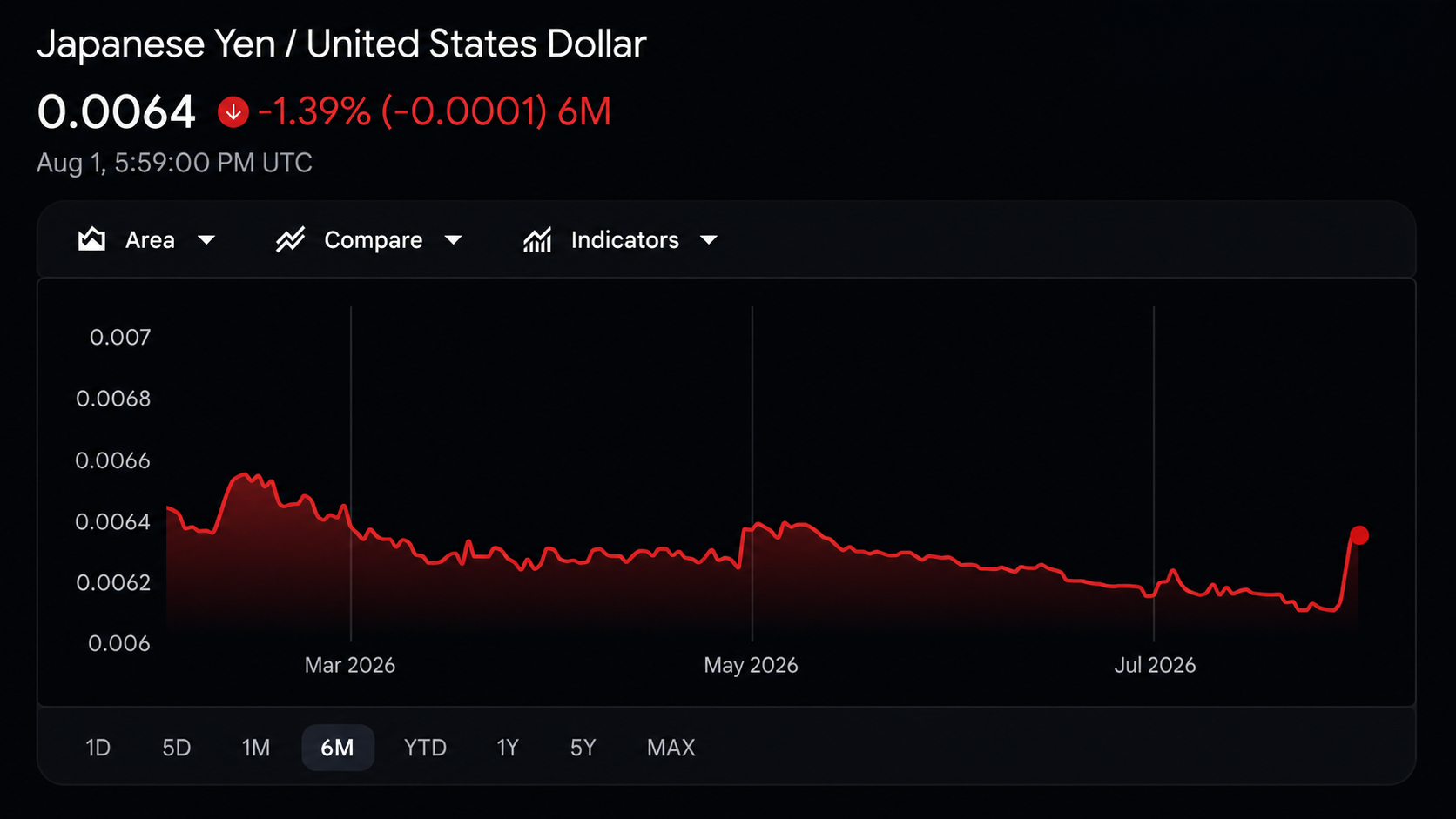
Japan already tried a record intervention of about 11.73 trillion yen, or roughly $73 billion, in April and May. The yen briefly strengthened before drifting back toward its prior lows, a pattern typical of Japanese interventions when not paired with a lasting shift in interest rate policy.
Bessent Calls the Yen Undervalued
Bessent has called the yen “very undervalued” and said excessive volatility was unhealthy for markets. His comments, paired with the reported Treasury purchases, signal a rare degree of coordination between the world’s largest and fourth-largest economies on currency policy.
Households and Investors Stand to Feel the Shift
For Japanese households, a stronger yen could ease the sting of high import costs. For American businesses, a steadier yen removes one source of disruption to global capital flows. Japan remains one of the largest foreign holders of U.S. Treasury debt, and officials on both sides have an interest in avoiding disorderly market swings that could trigger unplanned selling.
What Market Observers Should Watch Next
Whether the policy proves durable depends on fundamentals, analysts say. If the Bank of Japan raises rates further, or the Federal Reserve cuts them, the interest rate gap driving yen weakness would narrow and reinforce any official action. Without that shift, verbal commitments and one-time interventions have historically faded within weeks or months.
Global markets of all types will be watching for specifics. Traders want to know whether the policy sets explicit thresholds for future intervention, names a defined timeline or simply reaffirms existing cooperation. The announcement is also expected to land shortly before Group of 20 finance ministers meet, giving both governments a chance to signal unity on a broader stage.