Key Takeaways
- Futurebit is bringing home bitcoin mining to retail, partnering with Micro Center to sell its Apollo III machines at four U.S. locations starting Nov. 13.
- The Apollo III delivers up to 18 TH/s using 3nm ASIC chips, with an integrated Bitcoin full node and solo mining capabilities that let users independently validate transactions and compete for block rewards.
- Solo miners are increasingly making headlines for beating enormous odds, including 38 documented block discoveries in 2026, though winning remains exceptionally unlikely given Bitcoin’s massive network hashrate.
Brooklyn-based Futurebit announced Thursday that its Apollo III Full Node will be available at four Micro Center locations beginning Friday, Nov. 13. The initial rollout covers stores in Brooklyn, New York; Miami, Florida; Tustin, California; and Austin, Texas, coinciding with the grand opening of Micro Center’s new Austin location. Customers can also reserve the machines online for in-store pickup.
The partnership marks Futurebit’s first entry into physical retail, allowing customers to examine mining hardware and learn about bitcoin mining before purchasing a machine.
“When we started Futurebit, we made weekly trips to the DIY electronics section at the Brooklyn Micro Center to buy parts,” said Futurebit founder John Stefanopoulos, in a statement. He added that customers will now be able to purchase miners designed near that same store.
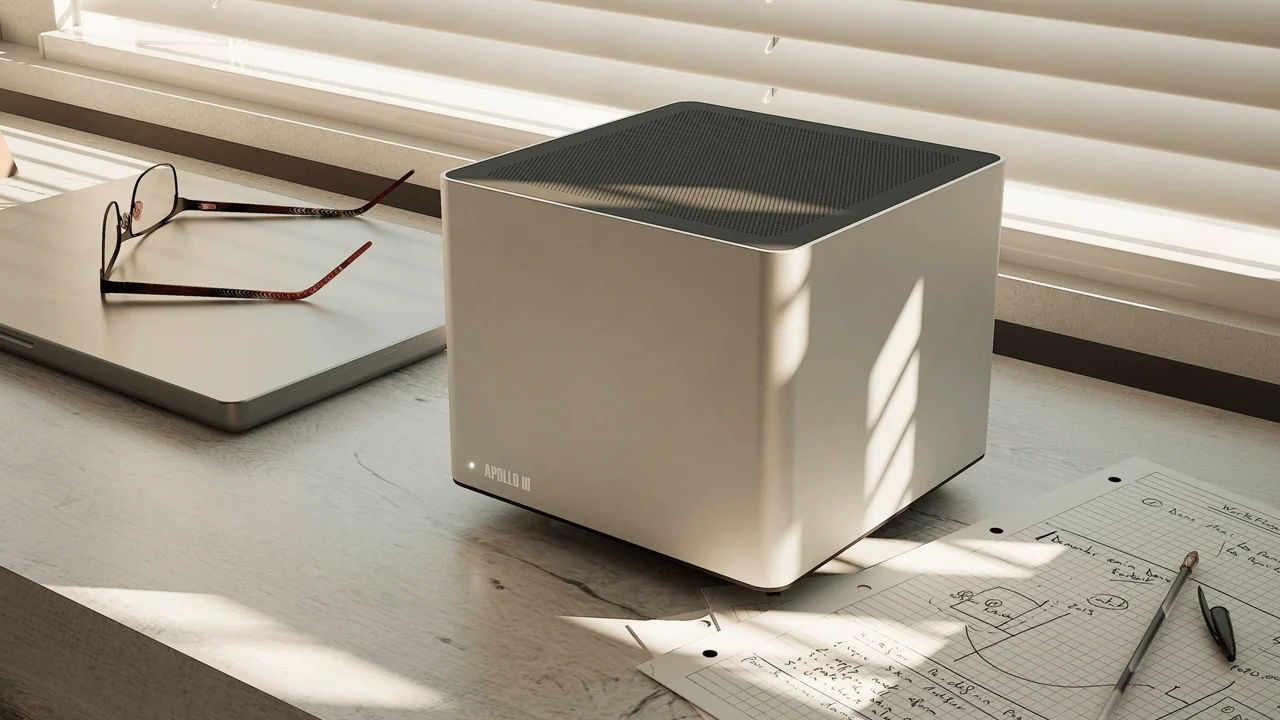
Futurebit unveiled the Apollo III in February, introducing a desktop-sized mining system powered by American-engineered 3-nanometer ASIC chips. The machine delivers up to 18 terahash per second (TH/s) in Turbo mode, while its lower-power Eco mode offers efficiency of up to 15 joules per terahash.
The device also incorporates a full Bitcoin node, built-in solo mining capabilities, an eight-core ARM processor, 8GB of RAM, and up to 2TB of storage. Its integrated design allows users to independently validate Bitcoin transactions and attempt to mine blocks without relying on an external mining pool.
More Solo Mining Wins to Come?
The retail expansion arrives amid growing attention surrounding solo miners who have successfully discovered Bitcoin blocks despite extraordinarily unfavorable odds.
Bitcoin.com News reported Wednesday that a solo miner operating through CKPool discovered block 975427, collecting a BTC reward worth approximately $230,000. The discovery marked the 38th documented solo-mining victory of 2026.
In late October, a Futurebit Apollo miner was credited with discovering block 973262, marking the fourth documented solo block from the company’s hardware and its first since March 2025. Another independent miner discovered a block the following day using approximately 16.2 TH/s of computing power.
Other successful miners have used considerably smaller devices. In July, a hobbyist operating a palm-sized Bitaxe machine at approximately 1 TH/s discovered a block worth roughly $200,000 at the time after just eight hours of operation.
Such victories remain exceptionally rare. With Bitcoin’s network computing power around 1,000 exahash per second, an individual Apollo III operating at its maximum 18 TH/s represents only a tiny fraction of the total network hashrate. Even continuous operation could mean decades or centuries between statistically expected block discoveries.
For Futurebit, however, the retail push is about more than winning mining rewards. The company argues that making independent mining and node operation accessible to ordinary consumers can help distribute Bitcoin’s infrastructure beyond the industrial mining companies and major pools that currently dominate the network.