Key Takeaways
- Larry Fink warns that halting data center construction risks pushing the U.S. economy into recession.
- Blackrock’s AI infrastructure partnership targets up to $100 billion in investment.
- Sanders and Ocasio-Cortez want a federal pause until stronger consumer and environmental safeguards exist.
Blackrock’s Larry Fink Warns Data Center Freeze Could Push U.S. Into Recession
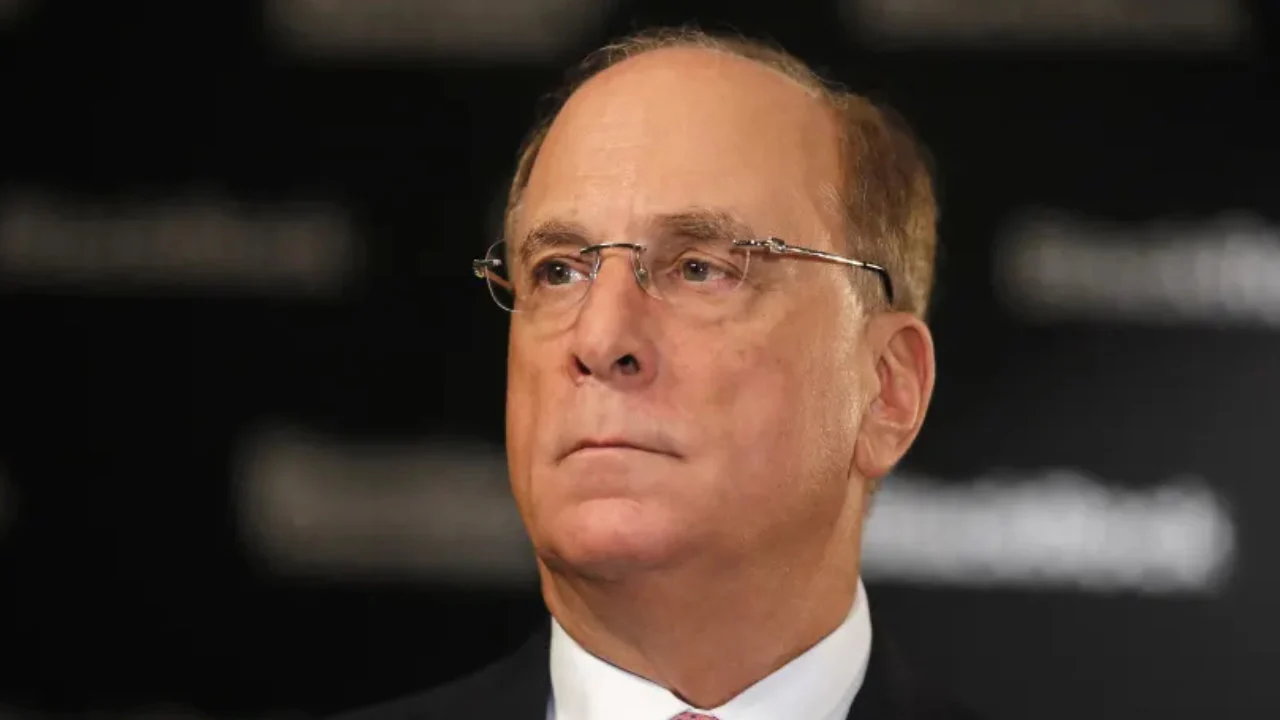
America’s artificial intelligence (AI) boom has become so deeply woven into the economy that stopping new data center construction could help tip the country into recession, according to Blackrock CEO Larry Fink. The warning comes as politicians, environmental organizations and frustrated residents push for restrictions on enormous computing facilities consuming electricity and water.
But there’s another wrinkle. Blackrock itself is helping bankroll the very infrastructure at the center of the controversy, including a partnership targeting up to $100 billion in investment. With trillions in future AI spending at stake, the fight over who foots the bill is heating up.
Fink Sounds Recession Alarm as Data Center Opposition Grows
Speaking to CNBC on Wednesday, Oct. 14, following Blackrock’s third-quarter earnings report, Fink delivered a stark assessment of what a nationwide construction freeze might mean. “If we have a moratorium of some sort in this country, we will be in a recession,” Fink told CNBC, according to a report by CNBC reporter Paulina Likos.
“So much of our economy is based on the buildout of this capex,” he added, referring to capital expenditures supporting artificial intelligence infrastructure. Fink further acknowledged public concerns surrounding the construction boom but argued that “most of it is on misinformation.” The Blackrock chief executive insisted:
“Data centers are not the problem. They’re creating more new jobs than ever before.”
His remarks arrive as opposition gathers momentum ahead of the Nov. 3 midterm elections. Communities are questioning whether the economic benefits justify higher electricity bills, water requirements and environmental disruption.
Sanders and Ocasio-Cortez Push for Construction Pause
Sen. Bernie Sanders, I-Vt., and Rep. Alexandria Ocasio-Cortez, D-N.Y., are among the prominent lawmakers advocating a federal moratorium on certain AI data center projects until stronger consumer, labor and environmental protections are established. Environmental organizations, including Food & Water Watch, have rallied hundreds of groups behind calls for restrictions.
Their argument is straightforward. Communities shouldn’t have to absorb rising infrastructure costs while technology companies race to expand computing capacity. New York has already imposed a temporary statewide pause on certain large AI data centers, while other jurisdictions are considering restrictions. The proposals generally target new construction or major expansions rather than shutting down operating facilities. Supporters describe them as opportunities to establish rules before approving additional projects.
Blackrock Has Billions Riding on AI Infrastructure
Fink’s warning carries another dimension because Blackrock has considerable financial interests tied to continued AI development. Through its AI Infrastructure Partnership with Microsoft, MGX, and other investors, Blackrock is participating in an initiative designed to mobilize $30 billion in equity and potentially $100 billion, including debt. The consortium’s roughly $40 billion acquisition of Aligned Data Centers illustrates the scale of that commitment.
During the CNBC interview with Jim Cramer, Fink described growing demand for financing throughout the American economy. “Well, I think some of that is some of our success. I mean, we are seeing demand for capital in all different segments of the economy,” he explained.
“I know everything related to AI and data centers is sexy and appealing. And we want to talk about it. But more and more organizations are coming to the capital markets. Blackrock is at the center point of those conversations,” Fink said.
A Trillion-Dollar Spending Boom Meets Political Resistance
Wall Street projections cited by CNBC suggest annual AI capital expenditures could exceed $1 trillion in 2027, with cumulative investment topping $5 trillion by 2030. Those forecasts help explain why Fink is sounding the alarm. Data center construction supports demand for electrical equipment, construction labor, energy infrastructure, semiconductors and financing.
At the same time, AI supporters argue that claims about artificial intelligence’s water consumption are often exaggerated. Early estimates suggesting a single ChatGPT response uses half a liter of water included both cooling systems and electricity production, often using worst-case scenarios. Newer measurements tell a different story.
Google’s AI team reports that a typical Gemini text prompt uses just 0.26 milliliters, roughly five drops. AI proponents also note that data centers account for a small fraction of America’s freshwater consumption, while newer cooling systems increasingly recycle water or use outside air.
They compare AI’s water demands with golf courses, lawn irrigation, and agricultural systems, arguing that consumption is relatively modest, although local water shortages remain a legitimate concern. If AI protests and moratoriums continue to gain traction, Fink sees a recession risk in restricting development. Opponents see financial and environmental risks in allowing expansion without stronger safeguards.
For Blackrock, the stakes include both the broader economy and its own infrastructure investments. For communities debating whether another data center belongs in their backyard, the question is considerably more immediate. Who gets the economic rewards, and who pays for the power?