
Key Takeaways
- Mike’s MK3 packs 460 vintage tubes into a working 8-bit computer with 256 bytes of RAM.
- Bletchley Park inspired Mike to turn 920 triodes into a hands-on lesson in early computing.
- Mike’s MK3 needs 15 minutes to warm up before its 16 instructions can get down to business.
Mike’s latest build is the kind of computer you can’t ignore: a wall-sized 8-bit machine that runs on 460 vacuum tubes pulled from the 1950s and 1960s. Called The Tube Computer MK3, it spreads registers, counters, RAM, and an ALU across a 190-by-130-centimeter panel, with 920 triodes wired into NOR logic gates you can actually watch at work. It is slow, heavy, and finicky, including a 15-minute warm-up before it behaves, but that’s the point. The project, sparked by a visit to Bletchley Park, turns the invisible churn of modern computing into something physical, audible, and relentlessly literal.
A retro masterpiece: Vacuum tubes make a grand comeback
Most weeks, the computing story is about smaller chips, bigger models, and another sprint from Nvidia or OpenAI. This week, it is about something wonderfully opposite: a wall-mounted computer built to be seen, not hidden. A builder who goes by Mike has assembled The Tube Computer MK3, a working 8-bit machine made from 460 vintage vacuum tubes.
It is hard not to linger on the intent. Modern processors are miracles of density, but they are also opaque. Mike’s point is to slow everything down and pull the logic out into the open, so you can watch computation happen step by step, the way early engineers would have experienced it.
The inspiration: A tribute to computing history
The spark, according to descriptions of the project, came after Mike visited Bletchley Park, the famous WWII-era codebreaking site that now operates as a public museum. Instead of cloning a known historical computer, he set out to design his own architecture, using the same basic era of components.
That decision matters because it turns nostalgia into engineering work. The machine is not a replica with period-correct cosmetics. It is a fresh design that borrows old constraints, the kind that today’s AI-data-center world avoids with brute-force scale and tight integration.
Building blocks: Inside “The Tube Computer MK3”
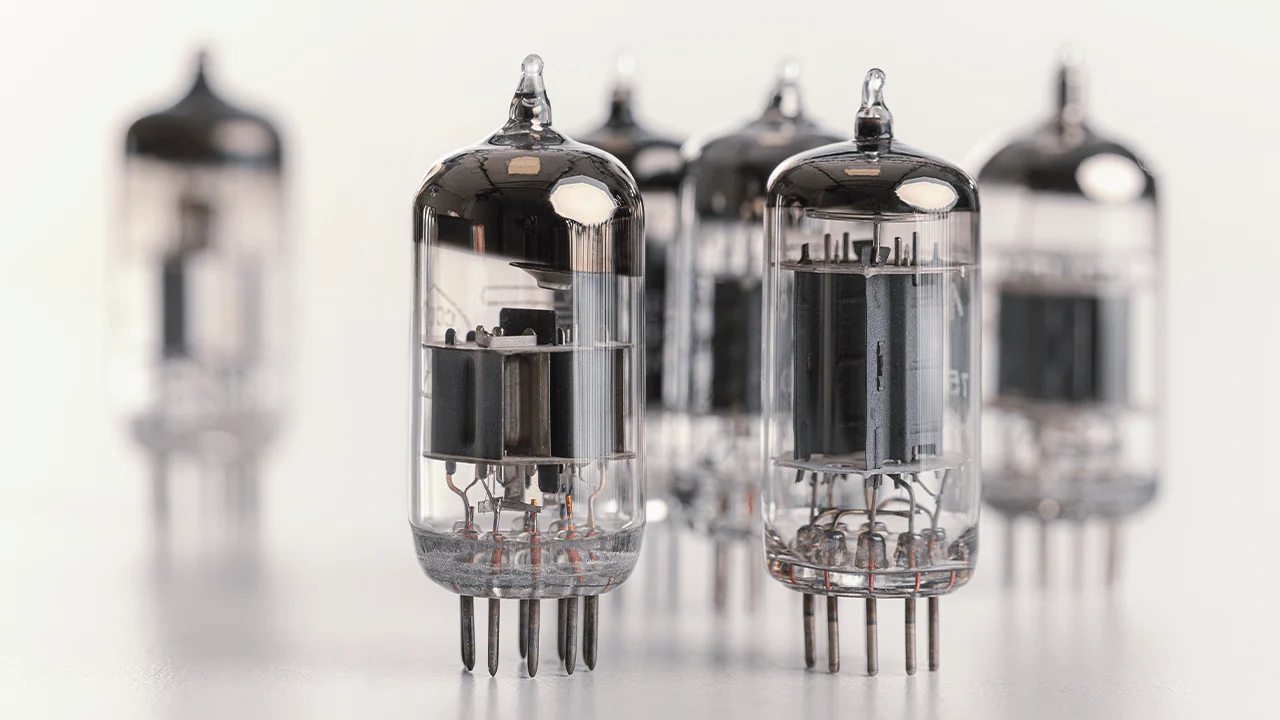
At the heart of the build are 6N3P double-triode tubes. Mike uses them to implement NOR gates, then combines those gates into the familiar building blocks: registers, counters, a clock, RAM, and an 8-bit arithmetic logic unit.
The physicality is the headline. The computer spans roughly 75 by 51 inches (a 190 by 130 cm panel), weighs about 44 pounds, and is organized into 46 modules. It even includes just 256 bytes of RAM, a number that reads like a typo in 2026, but is perfect for teaching what memory really does.
Performance and challenges of retro engineering
Running it is, by design, nothing like tapping “run” on a laptop. Mike says it takes about 15 minutes of warm-up time to reach thermal stability before computations begin, and the instruction set is limited to 16 operations executed in deliberate cycles.
And then there is upkeep. Vacuum tubes wear out, and replacements can be inconsistent depending on the specific tube’s rated lifespan. Still, watching a real program crawl across visible logic has its own payoff. In a moment when “AI” can feel like an abstract cloud, who would not want a computer that shows its work?